
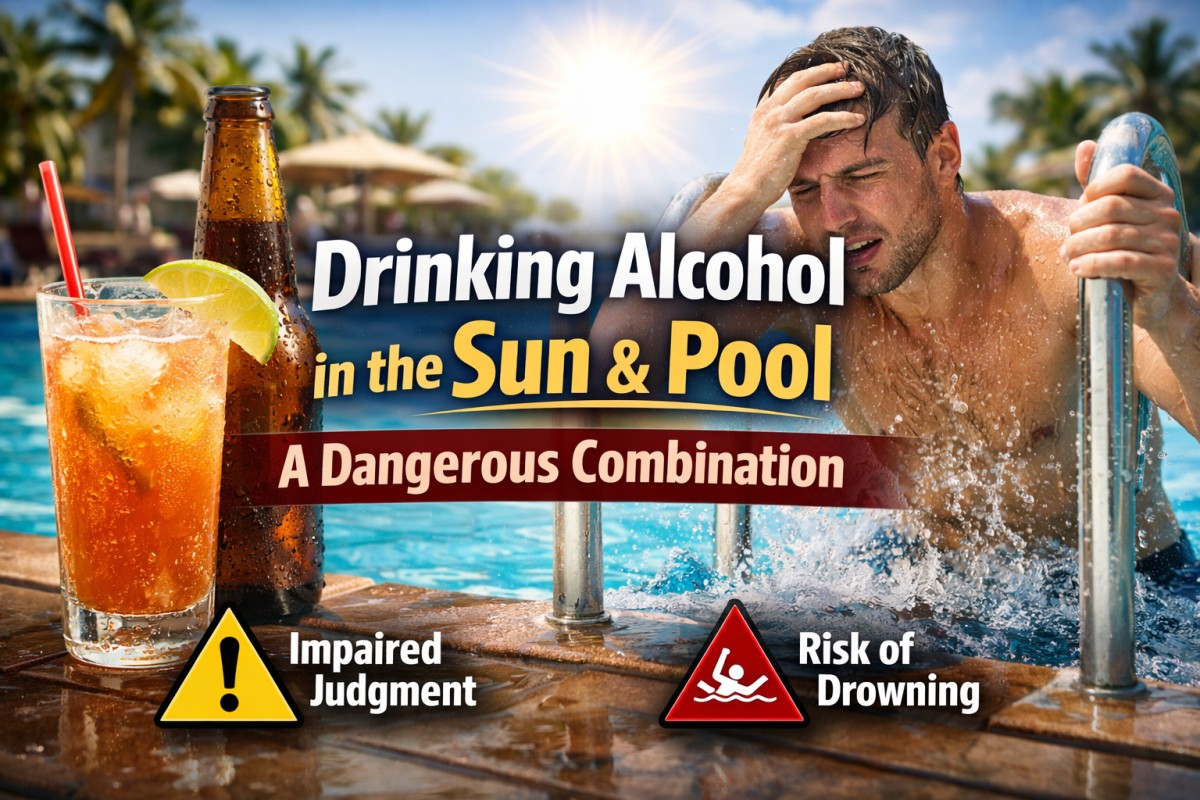
Spending a summer afternoon by the pool feels like the perfect setting for relaxation. Sunshine, cool water, friends, music — and for many people, alcohol. While it may seem harmless to sip a drink while floating in the pool, the combination of alcohol, heat, and water creates a much more dangerous situation than most people realize.
At NY Lifeguard, we train aquatic professionals across New York to recognize risk factors before they become emergencies. One of the most overlooked dangers we see every summer is how quickly alcohol affects the body when combined with hot sun and swimming. The results can escalate from mild impairment to a serious medical emergency in a matter of minutes.
Heat Intensifies Alcohol’s Effects
Many people report feeling “extra drunk” after spending time in the sun or getting out of the pool. That sensation isn’t imaginary — there are physiological reasons behind it.
When you’re exposed to high temperatures, your body works hard to cool itself. Blood vessels dilate (expand) to release heat, your heart rate increases, and you sweat to regulate internal temperature. Alcohol causes similar effects on its own. It also dilates blood vessels and lowers blood pressure.
When combined, heat and alcohol amplify each other.
This can lead to:
- Faster onset of dizziness
- Increased lightheadedness when standing
- Reduced coordination
- Impaired judgment much sooner than expected
You may consume the same amount of alcohol you normally would indoors, but in the sun, it can feel significantly stronger. Many people underestimate how quickly their blood alcohol concentration rises when they are already dehydrated and overheated.
Dehydration Happens Faster Than You Think
Pool environments can be deceptive. Because you’re surrounded by water, you may not realize how much fluid you’re losing through sweat. Even while swimming, your body continues to sweat in hot weather.
Alcohol is a diuretic, meaning it increases urine production and accelerates fluid loss. Add direct sun exposure and warm temperatures, and dehydration occurs much faster.
Dehydration alone can cause:
- Headaches
- Fatigue
- Confusion
- Muscle cramps
- Nausea
When combined with alcohol, these symptoms intensify. The result is a person who feels dramatically more intoxicated than they anticipated. Reaction times slow, balance worsens, and decision-making becomes compromised.
In a pool setting, compromised judgment is particularly dangerous.
The “Out of the Pool” Effect
One of the most common observations lifeguards report is how differently someone behaves after getting out of the pool.
Here’s why:
While you are immersed in water, hydrostatic pressure from the water helps circulate blood back toward your heart. This can temporarily stabilize blood pressure. When you suddenly exit the pool, that pressure disappears. Blood can pool in your lower extremities, causing a rapid drop in blood pressure.
If alcohol is already in your system — which also lowers blood pressure — the effect is magnified.
This is why individuals often feel:
- Sudden dizziness upon standing
- Blurred vision
- A spinning sensation
- Weakness or near-fainting
In extreme cases, someone may briefly lose consciousness. On a hard pool deck surface, that fall can result in serious head injuries.
Many people mistake this sudden wave of dizziness for “the alcohol finally hitting them.” In reality, it is the combined effect of heat stress, dehydration, alcohol, and rapid changes in circulation.
Increased Risk of Drowning
Alcohol is one of the leading contributing factors in recreational drowning incidents nationwide.
Even strong swimmers are affected. Alcohol reduces coordination, weakens motor control, and slows reaction time. It also impairs the body’s natural protective responses, such as the ability to cough forcefully or orient yourself if water enters the airway.
In a pool, drowning does not always look dramatic. It is often silent and quick.
A person who:
- Slips underwater unexpectedly
- Becomes dizzy after standing
- Misjudges depth
- Overestimates their swimming ability
may not have the physical control or awareness to recover.
What begins as casual drinking can escalate into a life-threatening emergency within seconds.
Heat Illness and Alcohol Don’t Mix
Another serious concern is heat exhaustion or heat stroke. Alcohol interferes with the body’s ability to regulate temperature. It can mask early warning signs of overheating, such as fatigue or confusion.
Someone who is drinking may ignore symptoms like:
- Heavy sweating followed by dry skin
- Rapid heartbeat
- Headache
- Disorientation
Because alcohol already causes relaxation and drowsiness, the signs of heat illness may go unnoticed until they become severe.
In a pool environment where people are socializing and distracted, these symptoms can be overlooked by others as well.
Impaired Supervision Around Children
In residential pool settings, alcohol consumption significantly impacts supervision. Even a slight delay in response time can be critical when children are in or around water.
Responsible water safety requires:
- Active, undistracted supervision
- Clear judgment
- Immediate reaction capability
Alcohol directly undermines all three.
Many preventable pool accidents occur not because someone intended to be irresponsible, but because they underestimated how quickly impairment set in.
A Safer Approach to Summer Gatherings
Enjoying a pool does not require alcohol. Hydration with water, electrolyte beverages, and shaded rest periods dramatically reduces risk.
If alcohol is present:
- Limit intake
- Alternate with water
- Avoid swimming after drinking
- Never combine alcohol with diving
- Ensure a sober adult is actively supervising
Most importantly, understand that feeling “fine” in the water does not mean your body is functioning normally.
The combination of hot sun, immersion in water, and alcohol creates physiological changes that can catch even healthy adults off guard.
At NY Lifeguard, our mission is prevention first. Every summer, emergency responders see incidents that began as casual poolside fun. Education and awareness are the strongest tools we have to keep families safe.
The pool should be a place for enjoyment — not risk. By understanding how alcohol interacts with heat and water, you can make informed decisions that protect yourself and everyone around you.
Leave a Reply
You must be logged in to post a comment.